Sunday, January 15, 2012

Opening the gates of speculation

Significant legal changes were enacted in the late 1990s which encouraged the historic housing bubble which began in 1996 and burst in early 2007. One of these laws was the Gramm-Leach-Bliley Act (G-L-B Act) which reversed the Banking Act of 1933, better known as the Glass - Stegall Act (G-S Act). These major changes and their repercussions are explained in terms of the SAMVA USA chart (Perpetual Union). Importantly, the financial crisis of 2007 - 2008 was accurately predicted before the event based on this chart as well as the sluggish economic recovery since.

Opening the gates
The G-S Act was enacted in the wake of the collapse of banking in the Great Depression of the 1930s.[1] It established the Federal Deposit Insurance Corporation (FDIC) in the United States and introduced banking reforms designed to control speculation. The G-L-B Act removed the restrictions of the G-S Act and thereby opened the doors for the biggest speculative boom in US financial history. It has also been alleged that the G-L-B Act transferred effective control over the entire US financial services industry (including insurance companies, pension funds, securities companies, etc.) to a handful of financial conglomerates and their associated hedge funds.[2]

On November 12, 1999, President William Jefferson Clinton signed the G-L-B Act into law with the following words:
“Today I am pleased to sign into law S. 900, the Gramm-Leach-Bliley Act. This historic legislation will modernize our financial services laws, stimulating greater innovation and competition in the financial services industry. America's consumers, our communities, and the economy will reap the benefits of this Act.“[3]
In short, while the aims were good, the legislation did not anticipate the inherent weakness for speculation in the housing market and the resulting crash and pain to US citizens that was to follow. Other legislative changes having a similar influence, involving e.g. housing mortgage giants Fannie Mae and Freddy Mac, were soon to follow. With growing knowledge of the elements of the crisis, the divine astrology of the Vedas and the new horoscope for the USA, it becomes possible to identify and warn against such developments in the future.

Astrology of the event
At the time of signing, the Venus-Sun period was operating in the SAMVA USA chart. Sun periods are normally associated with progress in US national life. The Sun, along with Jupiter, is a general indicator of banking. The Venus major period is associated with indications of the 4th and 6th houses, notably financial stability problems linked to housing. Transit 2nd lord Sun was debilitated and in old age in the 4th house of housing at the time of signing. Transit Rahu and Ketu at 12° 54‘ Cancer and Capricorn were afflicting natal Mercury as 3rd lord of enterprise and freedom of action at 12° 05‘ Capricorn and 7th house as well as Rahu aspecting natal Mars as 10th lord of laws in the 5th house of speculation. Transit Mercury at 3° 29‘ Scorpio was conjunct natal Jupiter as 6th lord of financial stability in the 5th house of speculation. Transit Saturn as 8th lord of obstacles and endings was debilitated at 19° 20 Aries and thus conjunct the MEP of the 10th house as well as Rahu at 17° 47‘ Aries. Transit 6th lord Jupiter was at 3° 29‘ Aries in the 10th house of laws. Transit 4th lord Venus was debilitated at 10° 11‘ Virgo and 3rd house.

As has been mentioned in earlier articles on this blog, the repercussions of the bursting of the housing bubble in the USA in 2007 have been serious. Moreover, the housing market is expected to remain rather weak during coming years, or until the Venus major period ends in April 2016, hampering the recovery of the economy. However, other factors are expected to turn positive in the forthcoming sub-period of Mercury from April 2012, linked to new enterprises and high tech/IT production.

Venus and housing
It has been repeatedly discussed on this blog how the the Venus major period in the SAMVA USA chart brought problems in the area of housing.

"As Venus is badly placed and weak in the 6th house of the chart, the acquisition of homes or vehicles is based on debt and this can become a source of conflict or problems, such as in mortgage debt defaults."[4]

Indeed, a housing bubble of unprecedented proportion developed in the USA during the Venus major period (April 1996 - April 2016) as seen in the accompanying graph by Schiller. The graph shows that housing values began to skyrocket as this major period began.

It has also been shown how during the Rahu sub-period (2003-2005) the toxic sub-prime debt was generated and sold around the globe. This was the catalyst of the financial problems once housing prices began to decline. A graph of the sub-prime issuance is shown in the article The US-led global financial crisis.[5]

Jupiter and banking
The serious banking problems erupted in the USA during the Jupiter sub-period (June 19, 2007-February 17, 2009) within the Venus major period (April 1996-April 2016).

The following graph shows clearly how it was in the Jupiter sub-period that the banking crisis broke out and US financial stability was harmed by the housing bubble bursting. Public finances were also harmed when the government increased its debt in protecting the banking system even if many banks went bust. In the Saturn sub-period (2009 - 2012) the focus has shifted to a sluggish recovery and unemployment.

One feature of the US financial crisis was the massive failure of banks stemming from the systemic failure in the housing loans.[4]

Table: Number of failed banks.
2006: 0
2007: 3
2008: 30
2009: 148
2010: 157
2011: 92

In most cases the failure took the form of "Purchase and Assumption". This is where the insured and uninsured deposits, certain other liabilities and a portion of the assets were sold to an acquirer.

One of the largest US banks, Bank of America, is now in trouble and may sell of assets to maintain a sufficient amount of reserves to be deemed "healthy" enough by the regulators to withstand temporary funding stress.[5]

The link between Jupiter and banking is clear in the SAMVA USA chart: Jupiter is 6th lord of financial stability. It is located in the 5th house of speculation. Jupiter is also the general indicator (along with the Sun) of banks. Finally, Rahu, indicator of manipulation, is in the MEP of the 10th house of laws, where it affects the 6th house of financial stability. In 1999, US legislators weakened the laws governing the banks, enabling the banks to become highly speculative, veritable casinos, thus setting them up for a crisis. Venus as 4th lord of fixed assets (housing) is placed in the 6th house. The banking problems are directly linked to the bursting of the house price bubble in early 2007.

Banks began to experience funding problems in July 2007, when news of losses linked to sub-prime mortgages began appearing and a German bank, which had invested heavily in these US housing market instruments, failed. In August 2007 an international liquidity squeeze emerged on the inter-bank funding market, with the US Federal Reserve and other central banks stepping in with emergency cash. In March 2008 the problems became so great that Bear Sterns bank failed and was taken over by J.P. Morgan. Other gigantic such failures occured in September 2008, including AIG, Fannie Mae and Freddy Mac, which had to be rescued. Inter-bank lending completely froze up on September 15, 2008, after Lehman Brothers collapsed. Since the massive crisis of that time, there have been ongoing after-effects, with bank failures, even after the Jupiter period ended.

This has been linked to transit afflictions involving either transit or natal Jupiter This is the case at present, with transit 8th lord Saturn afflicting transit Jupiter and transit stationary Rahu afflicting the 5th house, where Jupiter is natally placed. The fact that Rahu natally afflicts the 6th house, owned by Jupiter, is important in this respect. In particular, we can note the regular 20 year cycle of Saturn-Jupiter oppositions has been ongoing from early 2010 to early 2012 (exact on May 23 and August 16, 2010). This is consistent with the banking failures have been so great in 2010 and 2011, as the above table demonstrates. Despite that, the system remained functioning in these years, as sluggish economic growth emerged in the Saturn sub-period (February 2009-April 2012).

Conclusion
We know that the transit and period influences in the SAMVA USA chart allowed us to predict such problems. With the clarity of hindsight a more precise explanation has emerged concerning the elements of the crisis and their interaction. The associated astrological knowledge has value in warning about such weaknesses in the future.

References
[1] Chossudovsky, Michel (2008). "Global Financial Meltdown: Sweeping Deregulation of the US Banking System." Global Research, October 17. http://www.globalresearch.ca/PrintArticle.php?articleId=10588
[2] Glass-Stegall Act on Wikipedia.
[3] “Statement on Signing the Gramm-Leach-Bliley Act.“ The American Presidency Project. November 12, 1999.
http://www.presidency.ucsb.edu/ws/index.php?pid=56922#axzz1jWbWPgjV& McLaughlin, Martin (1999).“Clinton, Republicans agree to deregulation of US financial system.“ November 1, WSWS.org
[4] Cosmologer. "The year ahead for the USA." December 31, 2007.
[5] Cosmologer. The US-led global financial crisis. November 15, 2008.
http://cosmologer.blogspot.com/2008/11/us-led-global-financial-crisis.html
[6] FDIC Bank failures in the United States. FDIC.gov
http://www2.fdic.gov/hsob/HSOBSummaryRpt.asp?BegYear=2011&EndYear=2006&State=1&Header=0
[7] Reuters. "BofA told Fed it could sell branches in emergency: source." Jan 13, 2012 6:30pm EST.


Saturday, December 31, 2011

Five years of predictions

Yesterday marked the 5th anniversary of the discovery of the 20° Cancer rising SAMVA USA chart. The authentic horoscope for the USA is based on the event when the Maryland state legislature passed an Act to ratify the Articles of Confederation and Perpetual Union at 5:00 pm (LMT) on February 2, 1781 (set for Philadelphia, PA). In doing so, Maryland became the 13th and final state to ratify, giving birth to the United States of America as a new nation. This chart has been the basis of many accurate predictions for the coming year. In this article some of the
successful predictions of major events and their timing are recalled.

December 30, 2006 (first prediction based on the chart)
1. What was predicted: Problems for 'fixed assets' in early 2007.
What happened: House prices fell, causing the sub-prime crisis to erupt.
2. What was predicted: "A sudden event disturbs the social equilibrium...Violence...and loss of life" in the spring 2007.
What happened: The Virginia Tech shooting took place; the largest campus massacre in US history. The event was a shock for the nation.

January 6, 2007
What was predicted: Astrologer & Author V. K. Choudhry "In the recently proposed US chart for the 2nd February, 1781, 1705 hours, the transit influences show severe afflictions during middle of March, 2007, to early May, 2007, indicating lot of controversies, emotional involvement of the people in controversial issues, financial/market setbacks, fatal/serious accidents, weather vagaries/disturbances, setbacks in war fields, etc."
What happened: (see above)

December 31, 2007
1. What was predicted: "A crisis in the fall of 2008...The astrological situation will become decidedly more intense from late July...problems or stress will be felt for the wealth of the country (possibly having to do with a reduction in the value of the dollar or stocks)...This aspect peaks at the end of September and the situations that arise are expected to gradually ease in the following weeks."
What happened: A near collapse of US banking system took place in September 2008.
2. What was predicted: "Political conventions in the autumn of 2008, are likely to be quite memorable due to a sense of tension associated with political recrimminations [and] ongoing challenges to the financial system."
What happened: All of the above and the presidential candidate for incumbent party lost the election.
3. What was predicted: "Destruction of assets in late 2008."
What happened: In addition to hundreds of billions of dollars in asset losses in the financial crisis, investment scams came to light costing investors close to one hundred billion dollars.

August 29, 2008
What was predicted: Astrologer & Author V. K. Choudhry:
"Transit Mars, Venus and Mercury would be in exact or very close conjunctions between 13th to 15th September, 2008, and these three planets would be under the exact affliction of Rahu. Simultaneously, Jupiter would also be closely influencing Saturn. The Sun would be quite weak to offer the protection...
These afflictions may pose further challenges to the world economy as its impact is significant in the charts of countries like USA, India, China, UK, France, etc. etc."
What happened: the prediction was not only realised but Lehman Brothers declared bankruptcy on the the 15th of September - the date mentioned in the prediction! This event is considered the turning point in the crisis, making it infinitely more difficult.

December 31, 2008:
1. What was predicted: "In August the strains for the US and global financial system will seem to give way to more a positive outlook for the economy."
What happened: A recovery emerged in the autumn of 2009
2. What was predicted: "Improved employment conditions in high tech and analytical activities."
What happened: The IT sector was buzzing with new products.

December 30, 2009
1. What was predicted: "A crisis in the summer of 2010...Some violent events - natural or man made - are thus likely to take place during the summer."
What happened: the largest off-shore oil leak in US history took place in the Gulf of Mexico.
2. What was predicted: "The US economy is expected to remain on a sluggish but improving trend during the Saturn sub-period."
What happened: The economy saw a sluggish but improving trend.

December 31, 2010
1. What was predicted: "From the Autumn months [of 2011], and notably towards the end of the year such indications as speculation, financial markets, university life and children are likely to become disturbed, as well as ...some crisis regarding the image of the country."
What happened: The Occupy Wall Street (OWS) protests broke out. Some investment houses went bankrupt and there were grave concerns over the financial situation in Europe.

June 15, 2011
What was predicted: A further elaboration of the transits in the fall suggested a problem involving "morals and ethics of the people."
What happened: The OWS protests have revolved around the immorality of greed and injustice associated with an unequal distribution of wealth and income in US society.

December 30, 2011
Predictions were made for the coming year (see foregoing article).

Friday, December 30, 2011

Predictions for the USA in 2012

To predict what to expect in the USA during the year 2012, the period and transit influences in the 20° Cancer rising SAMVA USA chart (Perpetual Union) are examined. Among the salient insights is that the year 2012 will likely be easier than recent years. This is due in part to a change to a more auspicious sub-period in April and to less difficult transit strains seen. While the weakness associated with the bursting of the housing bubble will remain for some more years, the focus will shift from concerns about the sluggish economy to diplomatic and business initiatives around the world. There is plenty of conflictual energy seen this year, which could be associated with high profile court cases or military involvement. The end of the year may see growing problems concerning communal harmony.

Trend change in April
The SAMVA USA chart is running the Venus major period until April 2016. As Venus is the weakest planet in the horoscope, the conditions of financial instability associated with the bursting of the housing bubble will remain for some years. In April 2012, a change in sub-periods takes place, from the Saturn sub-period (February 16, 2009 - April 19, 2012) to the Mercury sub-period, suggesting a shift in the collective emphasis. In recent years, the focus has been on on the indications of Saturn as 8th lord placed in the 5th house of the horoscope in marginally weak strength. As a result, the focus has been on e.g. the sluggish economy and high unemployment. On the upside, the transit of Saturn through the sign Virgo and 3rd house has been associated with better employment conditions in the IT sector, linked to many innovations there. On November 15, 2011, transit Saturn passed into the sign Libra, which is expected to bring easy gains relating to land or natural resources. When Saturn is afflicted in Libra, some setbacks may take place in property matters and communal harmony. As Mercury is 3rd lord and sun-like planet in the 7th house of the chart, from April a shift in emphasis is expected towards advances in high tech activities driving economic developments and increased diplomatic activities of the US government

Key transits in 2012
1) station of Saturn at 5° Libra (Jan.-Mar.)
2) station of Rahu/Ketu at 20° Scorpio/Taurus (Jan)
3) transit of Mars in Leo (January - May)
4) station of Saturn at 29° Virgo (May-July)
5) transit of Mercury in Cancer (June – Aug.)
6) transit of Venus in Taurus (Apr.-July)
8) station of Rahu/Ketu at 11° Sco/Tau (Apr.-June)
9) station of Jupiter at 21° Taurus (Sep.-Oct.)
10) station of Rahu/Ketu at 2° Sco/Tau (Oct.-Dec.)

A tense beginning
From January 1 to mid February 2012, transit 8th lord Saturn and transit 6th lord Jupiter will be in opposition aspect, while Saturn is stationary around 5° Libra and 4th house. While this aspect is not otherwise afflicting in the chart, problems involving violence and financial instability are expected at the beginning of the year. There could be problems to land and natural resources, collective harmony as well as international trade and government administration. Such problems would be more pronounced in the first half of January, when transit 10th lord Mars and transit 4th lord Venus, dispositors of Saturn and Jupiter, are both afflicted by natal Saturn as 8th lord of obstacles and endings. The continuing transit nodal station in MEP of 5th and 11th houses, involving the morals and ethics of the people, which lasts until mid February 2012 would add to the problems in early 2012.

Long transits of fast moving planets
In the first five months of 2012 transit Mars will be in Leo and 2nd house. This is a good placement for Mars as 10th lord of government cabinet and foreign trade and as general indicator of courage and the military and police. From April to July, Venus will be placed in the sign of Taurus and the 9th house. This is good for the functional indications of Venus as 4th house of property matters and communal harmony and the general indications of luxuries, including air travel. From June to August, Mercury will be transiting the sign of Cancer and 1st house. This is good for the indications of the 3rd house, such as communication, transportation, courage and initiative as well as the general indications of high tech activities and analysis - especially as the Mercury sub-period will be operating.

Slow moving transit influences
The transit nodes will be conjunct/opposite natal 10th lord Mars from April through July 2012. This transit could bring strains for foreign trade, government administration, the military and police. Some challenge for law and order is likely. This could also indicate problems with economic conditions elsewhere. As Mars is strong in the chart, the strains will not result in a setback to these indications. On May 17, Jupiter will move into the sign Taurus and 11th house. This sign and house would be good for its indications, however, when Jupiter becomes conjunct the Moon and opposite planets in Scorpio, it would bring short lived conflictual energy to their indications. In late June (see transit chart) and early July, Jupiter will become conjunct transit Ketu, adding to the problems for the indications of the ongoing nodal affliction. There could be military activity around this time. In June and July 2012, transit retrograde Saturn moves into Virgo, where it afflicts natal Saturn. While the aspect is not of an exact orb, it could bring additional problems related to government communication with the people and easy gains. In September and October, 6th lord Jupiter will become stationary at 21° Taurus and the 11th house. This suggests conflict, even high profile court cases, involving the indications of the 11th house, such as the income, friendships and goals of the country, as well as the indications of the 3rd house of communication, 5th house of entertainment and 7th house of foreign relations. Of course, in a year with Presidential elections, this also suggests the campaign will become especially contentious at that time. During the last three months of the year, transit stationary Rahu and Ketu will be at 2° Scorpio and Taurus, respectively. From the late summer months, the nodes will have begun to afflict natal Jupiter as 6th lord at 4° 25' Scorpio and 5th house, also suggesting problems involving conflict.
.
Problems at the end of the year
As the year ends, transit 8th lord Saturn will be in applying conjunction with natal Ketu at 17° 47' Libra and 4th house and opposite natal Rahu in Aries and 10th house. This suggests problems for communal harmony, possibly along racial or ethnic lines, as well as the government, foreign trade and law and order. However, the problems will likely be felt more in early 2013 when Saturn becomes stationary at 17° 30' Libra.

Saturday, December 3, 2011

End of Empire

The fall of Singapore to the Japanese Army on February 15th 1942 is considered one of the greatest defeats in the history of the British Army and probably Britain's worst defeat in the second World War. In a span of few days, 90,000 British troops were overrun by 30,000 Japanese troops, who fought with a combination of speed and savagery. The British forces became prisoners of war. In a single stroke, Britain's status as a colonial power in South East Asia was ended. In short order, Britain's hold on Burma was also ended. A few years later Britain pulled out of India, which then broke up into Hindu India and what became Muslim Pakistan and Bangladesh.

In other words, the British Empire in Asia was delivered a mortal blow on that fateful day. This is also seen in the fact that the fall of Singapore and Burma had little impact on the course of the war in Asia and Pacific as the US military stepped into the breach, with its influence in the region growing.[1]

As has earlier been discussed, such a dramatic development is seen in the horoscope of the United Kingdom. The key natal factor behind the decline of the British Empire is the placement of Sun as 12th lord of foreign things and losses being conjunct the most effective point of the 4th house, which amongst other things rules land. However, on this fateful day, there were plenty of period and transit influences, triggering such an outcome.

The Saturn major period was operating from December 28, 1926 to December 28, 1945. Saturn is 6th lord of conflict in the 16° Virgo rising chart for the UK. This is similar to the situation in the USA, as its national horoscope was also running the period of the 6th lord during World War II. In the UK chart, Saturn is badly placed and weak at 2° 17' Leo and the 12th house. Saturn is further weakened by being debilitated in Navamsa chart. This placement suggests conflict, financial stability and health are associated with foreign things and losses. The problems are more as 12th lord Sun at 19° Sagittarius is conjunct the MEP of the 4th house of natural resources, including land. Sun also aspects the 10th house, giving, both problems and a prominent place in the world, not least as the Moon is also placed there, and the planet of status, 2nd lord Venus, is well placed in the 5th house.

Importantly, the Rahu sub-period was operating from August 8, 1940 to June 16, 1943. FM Rahu at 23° Pisces and 7th house of foreign policy aspects Mercury as 1st lord at 26° 28' Scorpio and 3rd house of communication and transportation. This aspect suggests the confidence and self image is subject to setbacks. The problems in Britain were more in this major and sub-period combination - a dual malefic period. Indeed, during this period other major problems hit Britain, including the severe bombing of London by the German Luftwaffe and land based V2 rocket-bombs. Britain was ultimately able to repel the attack but at major cost.

At the time of the stunning defeat in Singapore, when the British General signed the letter of surrender, several difficult transits were taking place:
  • transit Rahu (the true node) was stationary at 20° 20' Leo from January to March 1942. The three month station in one degree can bring crisis and setbacks to the indications of a natal planet or point it touches. As Rahu was conjunct the most effective point (MEP: +/- 5° from ascending degree) of the 12th house it afflicted the indications of this house, as well as the 4th, 6th and 8th houses. Aggravating its conjunction to the MEP of the 12th house was the aspect of Rahu to natal 12th lord Sun at 19° Sagittarius. This is a most difficult indication for not only the 12th house of losses, but also that which the Sun touches, the 4th house of land. Another aspect of transit stationary Rahu was to natal 8th lord Mars at 20° Aries and 8th house of easy gains. In short, there was a setback to any 'easy gains' Britain had enjoyed in this part of the world up to that time.
  • transit Ketu was also stationary at 20° 20' Aquarius and 6th house MEP, hence afflicting the indications of the house. Sudden problems for the indications of the 6th house, such as conflict, financial stability, health, are to be expected with such a long standing transit.
  • Natal Ketu at 23° Virgo was also aspecting transit 1st lord Mercury at 22° Capricorn and the 5th house, suggesting vulnerability for a sudden setback for the indications of self, including fame, for the British.
  • transit 12th lord Sun was placed at 2° 37' Aquarius and 6th house in exact opposition aspect to natal 6th lord Saturn. This is a stunning aspect concerning the timing of this dramatic setback for the UK.
  • transit 6th lord Saturn at 29° Aries and 8th house was weak in transit and thus adding to the vulnerability. Transit Saturn was also aspecting natal 11th lord Moon at 28° 20' Gemini and 10th house, further dashing the hopes and dreams of the country.
  • transit 8th lord Mars at 25° Aries and 8th house was casting an aspect to natal 1st lord Mercury in the 3rd house. This aspect highlights the obstacles and endings involved for the self-image of Britain as a colonial power.
In short, this devastating event in UK history is linked to truly horrible set of factors operative in the UK horoscope at that time, also triggering a natal factor.


References

[1] Britain's Greatest Defeat: Singapore 1942 By Alan Warren.

http://books.google.com/books?id=zosKzAoocu8C&printsec=frontcover#v=onepage&q&f=false

Sunday, August 28, 2011

Will the euro survive?

In the following article the prospects for the Single European Currency project are discussed from an astrological perspective. Based on a tentative Cancer rising horoscope for the formation of the European Union, it is found that "The planetary positions do not indicate a bright future“ for the Euro project. It is likely the euro project will continue but that problems will continue to haunt it. Moreover, after some time there is also the possibility that the euro project will come to an outright end.

Analysis of the European Union and euro
One of the major questions for the present time is if the entity known as the EU will survive in its present configuration. At the crux of the problems is the single currency, the euro. The single currency is based on the existence of a single European Central Bank and the System of European Central Banks - similar to the US Federal Reserve banking system. The real difference is that the EU, based on the Treaty of European Union, which entered into force at midnigh on 1 November 1993 in Brussels, does not have a federal government. With the new EU Constitution, the EU does have a President and Foreign Minister, but their power is limited and based on the decisions of the Council of Ministers, which report back to the member governments. The governing arrangement is similar to what the US had when the Articles of Confederation and Perpetual Union was in place (1781-1789). At that time, the US government was the Confederation in Congress Assembled. All the power was based on the State governments. That said, the EU has one advantage over the early US government, it already has a central bank. However, the weakness of this central bank is that it is not backed up by a strong federal government. This has been the basis of the recent Euro crisis, with small member states being punished by the markets for having become burdened by heavy debts. Without a central government, the EU can lend such states but not guarantee their debts. As a result, some states are fighting to stay solvent and not go bankrupt, which could ruin the euro project. Recently, the leaders of Germany and France decided to propose improved arrangements with the establishment of an economic government, which would ensure that governments keep their fiscal books in order. Will this, along with the large European System of Financial Assistance fund to lend member governments, be enough to calm the markets and ensure the continued viability of the euro? What do the stars suggest?

Notable views on the euro crisis
In 1999, at the outset of the euro, the famed US economist Milton Friedman said he was doubtful the euro project would work out.[1] On August 24, 2011, former Federal Reserve chairman Alan Greenspan said that the euro crisis was hurting the US economy [2] and that "the euro is breaking down."[3] On August 27, 2011, the new IMF head Christine Lagarde said in a speech at Jackson Hole, a conference of central bankers, that European banks may need to be recapitalised, involving government (taxpayer) funds if necessary.[4] The problems facing the euro are therefore legion and outlook is not indicating much relief for the time being.

Astrology of the EU and euro
The 23° 29' Cancer rising chart (attached) has some interesting parallels with the 20° Cancer rising SAMVA USA chart. However, the placements involving the currency and government are all a fair bit weaker in the EU chart.

1st lord Moon is exalted at 0° 33' Taurus and 11th house, where it has only limited strength. It is in mutual opposition aspect with 10th lord Mars in own sign at 0° 20' Scorpio and 5th house and is debilitated in Navamsa. Despite both planets being in deep infancy, there is some amount of fame and glory on account of this aspect, but not nearly as much as for the USA. This is more so as the 2nd lord Sun is debilitated at 14° 46' Libra and 4th house. It's dispositor, Venus, is debilitated at 26° 04' Virgo and the MEP of the 3rd house. In turn, 3rd lord Mercury is at 26° 04' Libra and the MEP of the 4th house. This is an interesting combination of mutual disposition, especially as the aspect of Venus to the 3rd and 9th houses boosts their indications and the same can be said of the aspects of Mercury to the 4th and 10th house indications. Venus is placed in a Sun-like house and Mercury is a Sun-like planet. The Sun is, in addition to being the Sun!, is also a Sun-like planet on account of its rulership of the 2nd house. Moreover, aside from a wide aspect from 6th lord Saturn at 29° 52' Capricorn and 7th house (not in the MEP) to 3rd lord Mercury in the 4th house, there are no other afflictions in this chart. That is a very good thing, suggesting that aside from frequent transit afflictions, there are no deep divisions running in the EU.

To assess the strength of the currency arranagments, we look to the strength of the 2nd and 11th houses and the Sun and Moon. The Sun and 2nd lord has only 62 percent natal strength despite all the influences, such that it is not a fairly strong planet. It is a moderately weak planet which may not be able to withstand strong transit afflictions. That said, the confidence may be reasonably high with this planet. Actually, it is a judgement call, what it can withstand. Moreover, the Moon in the 11th house has 15 percent strength, which is very weak and hence it does not support the indications of currency.

Considering the indications of government, notably the Sun and also Mars as 10th lord at 5 percent strength, we come to a similar conclusion. Mars does not add to the confidence of the Sun. However, it is through the benign aspect of a weak Moon, and vice versa, that some additional confidence may be gained.

If we then look at the additional influences of Mercury as 3rd lord of confidence (with 89 percent strenght) on the houses aspected, it would be helpful to the 4th house, containing the Sun, and to the 10th house, ruled by Mars. By the same token, the aspect of 4th lord Venus (with 49 percent strength) on the 3rd house, would give support to the confidence from the decent communal harmony, natural resources and fixed assets of the EU.

We can also note that Jupiter as 6th lord of financial stability is well placed in the 4th house with fairly good strength (83 percent). It suggests the EU will not be saddled with too much debt and that its ability to service debts is not in question. However, Saturn as 8th lord of easy gains and confidence of others has only 3 percent strength and is in the 7th house of others and foreign policy. Hence, this is not helpful to the overall assessment. Rahu and Ketu are placed in the 5th and 11th houses, in their houses of debilitation, creating some moderate disturbances for the speculative actitivities and incomes, friendships and ideals.

So, we have insufficient strength on account of the indications of currency and government, along with a notable lack of confidence within and outside the project. However, we also have a notable lack of afflictions in the chart and some good aspects. In view of this, a balanced judement is required concerning the question if the euro project will surive or not. Alternatively, if the euro project is judged to survive, it is likely it will be associated with a depreciating currency and/or higher interest rates on its debts than if otherwise would be the case.

Assessment
Based on the tentative horoscope for the EU, Astrologer & Author, V. K. Choudhry has offered his assessment of the prospects for the single currency project as well as the ability of the EU to form a government that will have the confidence of the markets. In his view

“The planetary positions do not indicate a bright future. The possibility of ability of the EU to form a government that will have the confidence of the markets is weak.“
His comment "The planetary positions do not indicate a bright future" should be interepreted such that the euro may continue indefinitely but with problems. At the same time he cautions that after some time the possibility of the euro project coming to an outright end is also there.

Near term development

Presently, transit Ketu is afflicting natal 4th lord Venus in the 3rd house. This has produced a sudden upset for the otherwise good communal harmony in the European Union. Finland has recently demanded collateral from Greece in return for its participation in the joint assistance being offered to the country in order to deal with its debt problems. The transit of Mars, as general indicator of courage, through the 12th house of losses, is also adding to the skittishness of investors in Europe. More importantly, with transit Jupiter as 6th lord of financial stability and conflict being stationary at around 16° Aries in August and September 2011, where it opposes the natal Sun, as general indicator of leadership in the EU, as well as being the 2nd lord of wealth, status and close relations, V.K Choudhry has opined that

“The persisting influence of transit Jupiter on the Sun in the EU treaty chart is likely to keep the conflicting situation going.“
To this we may add that from mid September, transit Saturn as 8th lord of obstacles will pass over the 23° 29' degree of the 3rd house, while being aspected by transit Ketu in the MEP of the 11th house. This suggests additional sudden problems for the confidence of outsiders in the EU project. This will be more so as transit Jupiter will in retrograde motion be applying in its opposition to the natal Sun.

Finally, it is likely, as predicted before on the SAMVA list, that the concerns over the EU financial situation will have a disruptive effect on the US financial system and economy. This would be consistent with the nodes settling into stationary placement in the MEP of the 5th and 11th houses of the
SAMVA USA chart, with the following repercussions, as discussed in the year ahead prediction for the USA.

"From the Autumn months, and notably towards the end of the year such indications as incomes, friendships, speculation, financial markets, university life and children are likely to become disturbed, as well as problems in transportation and some crisis regarding the image of the country."
A tentative horoscope
It should be kept in mind that the insight are based on the assumption that the present horoscope for the EU is authentic. While this horoscope corresponds well to the developments, until the confidence is further established, the insights based on this chart should be treated accordingly, i.e. with some uncertainty recognised as being there as well.

The value of mundane astrology
The real value of mundane astrology is that it provides us with a way to peer into the future of social developments. At its best, SA mundane vedic astrology allows us to gain a more precise insight into future real world developments than would otherwise be possible with rational projection alone, based on theoretical constructs, practical experience and uncertainty. It does so by indicating which way the trend is likely to go (up or down) based on the natal potential and major periods, as well as to also identify times when strains and unexpected developments are likely to take place, based on sub-period and transit analysis. Importantly, by indicating the likelihood of developments, the uncertainty is reduced, and individuals and governments can prepare themselves accordingly.

References
[
1] Milton Friedman on the euro, 1999.
http://www.cato.org/pubs/journal/cj28n2/cj28n2-10.pdf
[2] Alan Greenspan on the euro crisis hurting the US economy, August 24, 2011. http://blogs.wsj.com/economics/2011/08/23/greenspan-euro-crisis-hurting-u-s-economy/
[3} Alan Greenspan on the euro breaking down, August 24, 2011. http://www.presstv.ir/detail/195442.html
[4] Christine Lagarde, IMF head, on banking problems in Europe, August 27, 2011.
http://www.imf.org/external/np/speeches/2011/082711.htm

Thursday, July 14, 2011

Thirteen free and independent states

The question of the birth of the national entity known as the United States of America has been confused by the fact that the colonies declared independence from Great Britain in 1776, well before they created a national bond of union with the Articles of Confederation and Perpetual Union in 1781.

Three key facts of the declaration
A study of the Declaration of Independence reveals three key facts.
1. The colonies declared themselves to be “free and independent states“
2. The states were “united“ in declaring - not their nationhood – but their individual existence and independence. This is why the stile “thirteen united STATES OF AMERICA“ was used in the 1776 declaration.[1] The stile UNITED STATES OF AMERICA, indicating nationhood of the thirteen states, appeared in Article 1 of the 1777 Articles of Confederation and Perpetual Union.[2]
3. The declaration dissolved all political connection between the free and independent states and the British Crown.

The declaration
In Congress, July 4, 1776.
THE UNANIMOUS DECLARATION of the thirteen united STATES OF AMERICA


"We, therefore, the representatives of the united States of America, in General Congress, assembled, appealing to the Supreme Judge of the world for the rectitude of our intentions, do, in the name, and by the authority of the good people of these colonies, solemnly publish and declare, that these united colonies are, and of right ought to be free and independent states; that they are absolved from all allegiance to the British Crown, and that all political connection between them and the state of Great Britain, is and ought to be totally dissolved; and that as free and independent states, they have full power to levy war, conclude peace, contract alliances, establish commerce, and to do all other acts and things which independent states may of right do."
According to the World Book Encyclopedia the "Articles of Confederation was the agreement under which the thirteen original colonies became the United States of America. They were the supreme law of the land from March, 1781 until the adoption of the Constitution in 1789.” However, this is only half the truth.

Perpetual Union is the key
When the Founding Fathers adopted "The unanimous Declaration of the thirteen united States of America" on July 4, 1776, they didn’t form the nation called The United States of America. The true birth of the USA took place with the ratification of the Articles of Confederation and Perpetual Union. However, this fact is often obscured by the fact that the Articles is a two-fold document. One part contains the constitution for the new country. The other part, which often gets obscured, is the formation of the nation as a Perpetual Union. The U.S. Supreme Court confirmed the inviolability of the Union in 1869.

Another notable insight is that the process to draft the Declaration of Independence began on June 11, 1776, while a parallel process to draft the Articles of Confederation and Perpetual Union was set in motion on the following day, June 12, 1776. The draft Declaration was ready for discussion in the Continental Congress by July 1. The decision to declare independence was approved on July 2 and the final wording of the text was accepted by 12 of the 13 states on July 4, 1776 - with New York giving its consent one week later. The Declaration was not signed by most of the states representatives until August 2, with the affixing of all signatures taking longer. By comparison, the draft of the Articles was completed in the autumn of 1777, when it was sent to the Congress for its approval. The final version of the Articles was approved by Congress on November 15, 1777 and sent out to the thirteen free and independent states for their ratification. That process was completed in early 1781, when the new nation came into being.

It is a historical incident that made it so that the Union gained its unanimous assent with Maryland becoming the thirteenth state to pass an act by its state legislature declaring its decision to ratify the Articles. The decision made the Union a reality. This is so even if a formal affixing of the signature of state delegates to the Articles took place only later, with the new Constitution entering into effect on the following day - when the Second Continental Congress reconvened as the United States in Congress Assembled. It was the cementing of the Union that made the USA a country and not the approval of its first constitution. The story of Maryland's ratification is explained in detail
here.

SAMVA USA chart (Perpetual Union)
This is why the 20° Cancer rising SAMVA USA chart (Perpetual Union) is based on the time of 5:00 P.M. on February 2, 1781 in Annapolis, when the act was signed by the Governor of Maryland, Thomas Sim Lee (equivalent to 4:58:33 P.M. in Philadelphia). Excellent confidence has been established in this horoscope for the USA based on numerous accurate predictions - documented in many articles on this blog.

References
[1] Image of the handwritten original copy of the Declaration of Independence
http://upload.wikimedia.org/wikipedia/commons/0/07/Us_declaration_independence.jpg

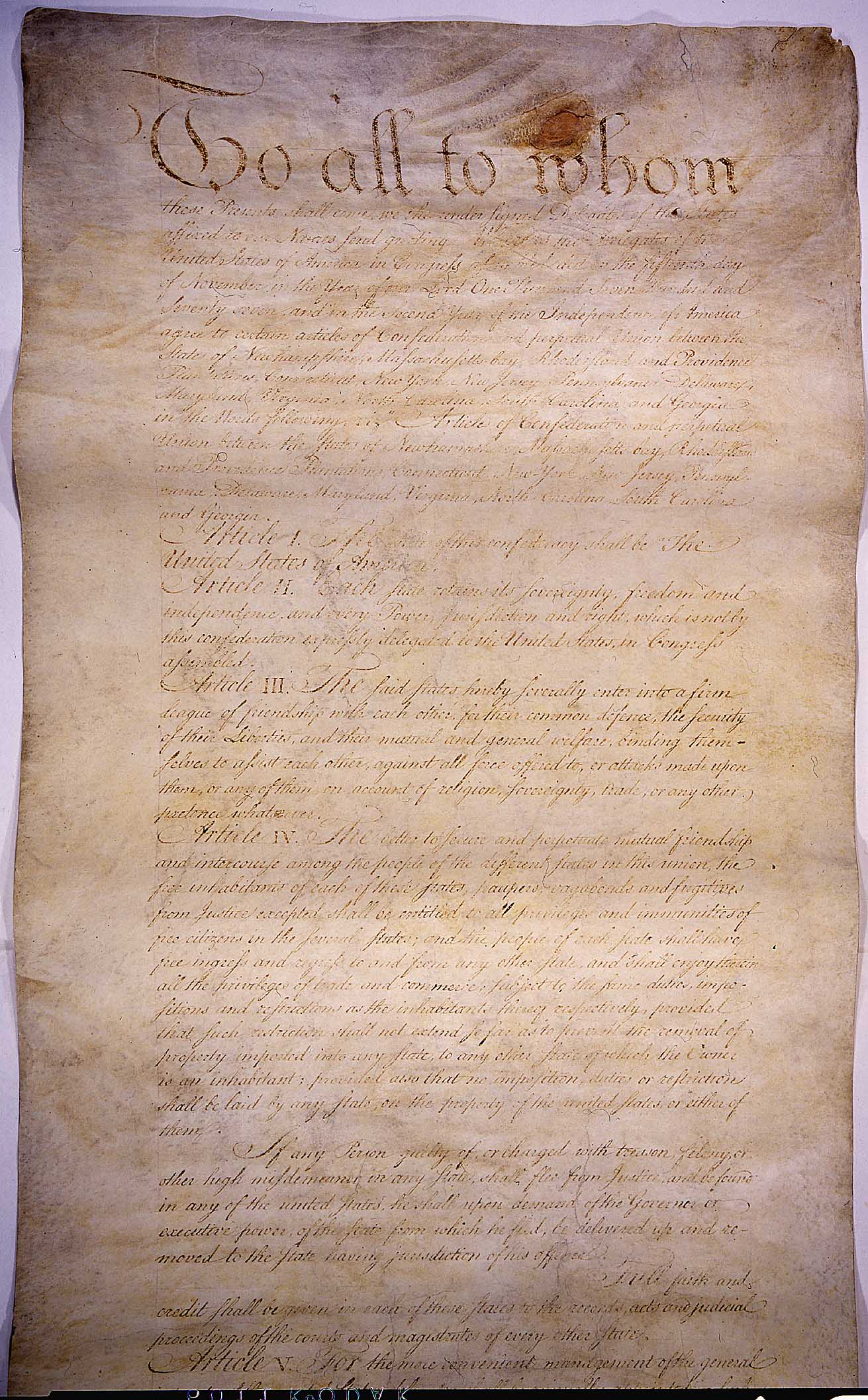
[2] Image of the handwritten original copy of page one of the Articles of Confederation and Perpetual Union.
http://upload.wikimedia.org/wikipedia/commons/b/b4/Articles_page1.jpg

Monday, June 20, 2011

Oscar Wilde and Victorian morality

One episode in British history serves to remind of the Victorian morality that reigned supreme over one century ago. The social ethic emphasised values espousing sexual restraint, low tolerance of crime and a strict social code of conduct. The Victorian period is considered to have ended with the death of Queen Victoria in 1901. A signal event at the end of this period was the trial and imprisonment of author Oscar Wilde on charges of "gross indency." In particular, the episode shows the effort of upper class individuals and the authorities to rid the country of tendencies considered gross and indecent. It is also fascinating that one of the most famous and certainly the most witty literary person of his time was at the center of the case.

Oscar Wilde
Oscar Wilde was born on 16 October 1854 and died on 30 November 1900. He was an Irish writer and poet. After writing in different forms throughout the 1880s, he became one of London's most popular playwrights in the early 1890s. Today he is remembered for his epigrams, plays and the circumstances of his imprisonment, followed by his early death.

At the turn of the 1890s, Wilde refined his ideas about the supremacy of art in a series of dialogues and essays, and incorporated themes of decadence, duplicity, and beauty into his only novel, The Picture of Dorian Gray (1890). The opportunity to construct aesthetic details precisely, and combine them with larger social themes, drew Wilde to write drama. He wrote Salome (1891) in French in Paris but it was refused a licence. Unperturbed, Wilde produced four society comedies in the early 1890s, which made him one of the most successful playwrights of late Victorian London.

On February 14, 1895, Oscar Wilde's last play, the comedy The Importance of Being Earnest, was premiered at St. James' Theatre, London. This was at the height of Wilde's fame and success, when he was the toast of London. But Wilde also had a secret. The Marquess of Queensbury had become angry when he found out that Wilde had taken his son, Lord Alfred Douglas, as a lover. On February 18, Queensbury left his calling card at Wilde's club, the Albemarle, inscribed: "For Oscar Wilde, posing somdomite[sic]". Wilde, egged on by Douglas and against the advice of his friends, initiated a private prosecution against Queensberry in March, to clear his name. As a result, Margeuess Queensbury was arrested on a charge of criminal libel: as sodomy was then a crime, Queensberry's note amounted to a public accusation that Wilde had committed a felony. Queensberry could avoid conviction for libel only by demonstrating that his accusation was in fact true.

During the trial, with the help of private investigators, Queensbury allegations were in fact proved true, making Wilde a felon. Queensberry won a counterclaim against Wilde for the considerable expenses he had incurred on lawyers and private detectives in organising his defence. Wilde was left bankrupt; his assets were seized and sold at auction to pay the claim. After Wilde had lost his libel case against the Marquess, the government had no option but to initiate a case against him and on April 6 Wilde was arrested at the Cadogan Hotel, London, for gross indecency. For several weeks the whole country was caught up in news of the most spectacular trial of its time. The facts were stacked against Wilde and on May 25, 1895 he was convicted of gross indecency with other men and taken to Pentonville Prison to begin his two years' sentence of hard labour. While in prison, Wilde wrote De Profundis in 1897. It was first published in 1905, a long letter which discusses his spiritual journey through his trials, forming a dark counterpoint to his earlier philosophy of pleasure.

Upon his release Wilde left immediately for France, never to return to Ireland or Britain. There he wrote his last work, The Ballad of Reading Gaol in 1898, a long poem commemorating the harsh rhythms of prison life. His final years were spent in the Hotel d'Alsace in Paris, where he died destitute at the age of forty-six.

An interesting anecdote is that after Wilde's death, Lord Alfred Douglas married and had a son. After the Rahu period ended and the Jupiter major period began, Lord Alfred Douglas denounced Wilde at a trial in 1912, describing him as "the greatest force for evil that has appeared in Europe during the last three hundred and fifty years". Douglas added that he intensely regretted having met Wilde, and having helped him with the translation of Salome which he described as "a most pernicious and abominable piece of work".

Astrology of the case
On December 28, 1892, the 18 year Rahu major period commenced in the 16° Virgo rising horoscope for the Union of Great Britain and Ireland. The Rahu sub-period operated until September 10, 1895. According to astrological theory, the Rahu energy is especially pronounced in the national life during the Rahu-Rahu period. To understand these events in terms of the chart it is useful to review the meaning of this planet. On Yournetastrologer.com, Rahu is described thus:

Rahu is personified as a diplomat and a shadowy planet and a legendary DECEPTOR when disposed beneficially. Indicates diplomatic jobs, jobs requiring manipulations with facts, deals in poisons and drugs. It signifies cheats, PLEASURE SEEKERS, insincere and IMMORAL ACTS, speculative trading markets, etc... When afflicting, CAUSES FINANCIAL SETBACKS...etc.
As regards its mundane signfications, it is described thus:

Diplomatic moves, MANIPULATIONS, deceit, greed, LUST, selfishness, speculative trading markets and LIES.
Natally, Rahu is placed in the 7th house, suggesting disturbances related to such indications as pleasure and amusement resorts, tourism, bond of relationships amongst masses and business establishments, foreign affairs and agreements. Rahu aspects Mercury, which is 1st lord placed in Scorpio and the 3rd house. The 1st house rules

the conditions of the country as a whole, PEOPLE AND THEIR GENERAL OUTLOOK, STATE OF LAW AND ORDER, public health, GOVERNMENT, REPUTATION, valor and its position in the world.
While the 3rd house rules

communication of the Government with the public, means of communications in the country including transport, media, telecommunications and information technology. It governs the AUTHORS, philosophers, philosophical thought, LITERATURE and LITERARY PERSONS, education and infra-structural facilities in the country besides governing democracy and peace talks.
The above suggests some manipulation involving the 7th house of significant other involving the national identity, communication, etc.. The 3rd house also has to do with authors, literature and literary persons. Clearly, the case revolved around Victorian ethics concerning sexual relations and the British identity. Moreover, as the Rahu period had begun in 1892, we can infer that the Victorian morality had begun to crumble before Queen Victoria died. Oscar Wilde's case undoubtedly represented a significant blow to these values. However, more is needed to explain the event itself, the transit of planets in the chart. Importantly, the aspect of a transit stationary Rahu to a weak natal placement is expected to bring a crisis to the affected indications.

Another interesting feature of the Rahu period is that Britain was engaged in numerous acts of foreign policy manipulation, consistent with Rahu in the 7th house. Literary fiction also flourished during those years, with Arthur Conan Doyle introducing his work on the famous private investigator, Sherlock Holmes, in 1893. H.G. Wells published The Time Machine in 1895 and Anthony Hope's novel The Prisoner of Zenda became famous. Rudyard Kipling's The Jungle Book emphasising the splendors of the Indian jungle was published. George Bernard Shaw debuted his play Arms and the Man.

Transits behind this significant event
In the 16° rising Virgo horoscope for the UK, transit Mars as 8th lord of obstacles and endings was in early Taurus in aspect to natal Saturn as 6th lord of enemity in the 12th house of losses, when Marquees Queensbury made his public accusation against Wilde. Transit Mars had moved to an opposition of 1st lord Mercury in the 3rd house when the case was brought against Wilde. Moreover, transit 6th lord Saturn was stationary at 15° Libra and conjunct the most effective point of the 2nd house of family, when the case began. It was, however, the transit station of Rahu at 29° Aquarius and the 6th house of court cases that the two cases were held. This is more important, as Rahu at that degree closely aspects the Moon as 11th lord of ideals. The Moon also represents the queen in the heavenly cabinet. The Moon is also linked to the royal family in the UK, being placed in the 10th house in a state of weakness, representing the declining influence of the monarchy. It is therefore no surprise to see a connection between this case and the morality of the country linked to Queen Victoria.

The forthcoming Rahu period
The UK is an national entity that dates back to midnight on January 1, 1801 in London. The Vimsottari dasa-bukhti periods turn one whole cycle every 120 years. The 1890s brought the first major and sub-period combination involving Rahu. The next Rahu major period is due to begin on December 28, 2012 and last until December 28, 2030. We could expect some events to occur during this period that again bring out strongly the indications of these placements in the national life. However, a lot depends on the transits involved.

References
Wikipedia articles on Victorian period and Oscar Wilde
http://www.yournetastrologer.com/learn_astrology5.htm
http://www.yournetastrologer.com/mundane_astrology.htm

Sunday, April 17, 2011

Iceland's financial troubles

In the 20th century the Icelandic economy was transformed from a subistence economy, based on agriculture and fishing, into a modern economy. The gains in living standards were enormous, with Icelanders going from being the poorest people in Europe to some of the best off. In recent decades, there has also been a major transformation of the economic conditions and a difficult financial crisis. These developments are analysed in terms of the 20° Scorpio rising horoscope for Iceland.

EEA Agreement
After experiencing high economic growth and high inflation from the late 1960s to the early 1990s, significant reforms of the economy took place with Iceland joining the European Economic Area in 1994. In doing so, Iceland gained unfettered access to the European Single Market, opening up the free flow of labour, capital, goods and services to and from Iceland. The change resulted in increased international opportunities and competition. Inflation was curtailed and the economy became increasingly diversified. Services sector jobs increased in such areas as tourism, IT production and finance. Importantly, following accession to the EEA, Iceland experienced a major expansion which resulted in a crash. In 2000, the IT bubble burst globally and in Iceland. A sharp retrenchment in the IT sector activities and employment followed. In the 2000s, the banking system experienced phenomenal growth, mostly abroad. However, in late 2008 this was followed by the complete collapse of the Icelandic banks in the international banking crisis.

Saturn major period
The Saturn major period ran from February 23, 1981 to February 24, 2000. This is the period when inflation and fluctuations in the purchasing power were highly volatile due to exchange rate changes. During this period a consensus was reached in early 1990s to bring wage growth into line with low and stable inflation, with success for the remainder of the decade. Saturn is 4th lord placed in infancy in the 8th house, where it is conjunct infant Moon as 9th lord. As such, the indications of Saturn and the 4th house are highlighted, but also sub-periods need to be considered to explain the developments. For instance, when Iceland opened up its economy, the Mars sub-period was operating. Mars is 6th lord placed in the 9th house, where it is debilitated and closely afflicted by the nodal axis. The decision to open up the country was fiercly debated and controversial.


Mercury major period
Since February 24, 2000, Iceland has been in the Mercury major period. During the Ketu sub-period, the last of three banks was privatised. Ketu is placed in the 3rd house of initiative and is opposite 6th lord Mars, which suggests sudden financial setbacks. This development was followed by tremendous expansion of the banks abroad. The growth of leverage, both at home and abroad, resulted in concerns on international financial markets in early February 2006, during the sub-period of an infant 12th lord Venus in the 7th house, that the banks were running out of financing options and vulnerable to collapse. At that time, the Icelandic banks became the embodiment of "the canary in the coalmine" and thus an indicator of the conditions in the international financial system. The banks were able to refinance in mid 2006, after the sub-period of a strong 10th lord Sun in the 7th house began, thus temporarily allaying the fears. They also accelerated deposit taking activities in foreign countries, notably the UK and Netherlands. However, the problems in the international financial markets worsened in early 2007. Concerns voiced by Alan Greenspan, former Chairman of the Federal Reserve, about an imminent recession in the USA linked to the stalling housing market startled the market in late February 2007. In March, the sub-period of a badly placed 9th lord Moon began. At this time, poor decisions were made by some of the Icelandic bankers to increase the leverage even more. After the international financial crisis began in earnest in August 2007, the Icelandic banks were completely shut out of the international financial market. After the sub-period of severely afflicted Mars began in August 25, 2008, the death-knell of the Icelandic banks was sounded. In early October 2008, the British government of Gordon Brown took the grave step to close Icelandic banks in London and apply terrorist legislation to the country due to lack of security involving the deposit taking activities. This act effective froze capital flows to and from Iceland. Since then Iceland has been in crisis mode, involving capital controls, draconian budgetary measures to reign in the budget deficit and reduce the debt associated with the banking collapse and efforts to restore a viable banking system.


Icesave dispute
At the same time, Iceland has endured a diplomatic dispute with Great Britain and Netherlands, concerning an implied (not explicit) guarantee of the Iceland state for deposit taking by private Icelandic bank branches in these countries. Since the Rahu sub-period, which began in August 2009, Iceland has negotiated several deals with these countries, but the President has refused to sign the legislation, insisting the nation make the decision. In two referendums, such agreements have been rejected by the populace, most recently on April 9, 2011. The Icelandic voters are rejecting the interpretation of the EU Directives that tax payers are automatically responsible for guaranteeing deposit taking by irresponsible private banks and people seeking highest returns on their deposits, at the neglect of risks involved. The EU Directives are, of course, aimed at securing public confidence in the banking system.

Credit ratings
Prior to the second referendum, the US and British credit rating agencies threatened to reduce the credit rating to junk status. This would make it harder for the Icelandic government, and in fact, Icelandic firms, to borrow abroad. While this is a likely development in the short term, a more auspicious sub-period of Jupiter will open on March 10, 2012. Jupiter as 2nd lord is exalted in the 9th house. While in old age, Jupiter is sufficiently strong to bring benefits and withstand transit afflictions. On the down side is the fact that transits are turning disadvantageous for Scorpio ascendants. In May 2011, the nodes will move into Scorpio and Rahu where they remain until early 2013. At the same time, 2nd lord Jupiter will move into the 6th house of financial stability, where it remains until May 2012. In November 2011, 4th lord Saturn then moves into the 12th house of losses, where it remains until November 2014.


Future periods
The Ketu major period begins on February 23, 2017. This period 7 year period is likely to involve difficulty for Iceland. The likely manifestation is some form of isolation or separation linked to problems with regard to financial stability, conflict or its ability to act. Possibly, the Icesave dispute will be resolved to the disadvantage of Iceland, entailing either financial repayments or limits to its participation on the European Single Market. The following 20 year major period of Venus, from 2024 to 2044, will likely also be linked to some weakness in the national affairs, linked to foreign policy. Possibly, Iceland will join the EU in coming years. From 2044, the Sun period will reign, with a resurgence in Iceland's position in the world likely.

Monday, February 21, 2011

An unpredictable President

Normally, we look at mundane horoscopes to examine national events. In this article, we look at an inauguration chart of the President of Iceland, to explain controversial actions taken by him. At 4:25 PM on August 1, 2008 in Reykjavik, Olafur Ragnar Grimsson took the oath of office of his third term as President of Iceland.
.
An afflicted 10th house
At this moment, 23° 55‘ Libra was rising and all planets are well placed in the horoscope. First lord Venus is weak in infancy in Leo and 11th house. Seventh lord Mars is also conjunct the 11th house MEP, suggesting influence of foreign relations for hopes and wishes. The best placement is 3rd lord Jupiter conjunct the MEP of its own house. A notable feature is the severe affliction of the 10th house and its lord, the Moon. FM Ketu is placed at 24° 32‘ Cancer and conjunct the MEP of the 10th house, which gives a pronounced separating influence on the 10th house affairs, as well as the 2nd, 4th and 6th houses. This influence suggests scope for some sudden, electrifying events. The weakness is more pronounced as 10th lord Moon is at 19° 14‘ Cancer where it is conjunct 12th lord Mercury at 18° 58‘ Cancer. Both planets are widely conjunct the MEP of the 10th house. 11th lord Sun at 16° 47‘ Cancer is also afflicted by the 12th lord. These placement suggest sudden setbacks involving the process of law.
.
Icesave dispute
An interesting development in Iceland since October 2008, is the so-called Icesave dispute, which is a diplomatic dispute that began in 2008 between Iceland on one hand and the United Kingdom and the Netherlands on the other. The dispute is centered on the retail creditors of the Icelandic bank Landsbanki, which offered online savings accounts under the "Icesave" brand. The bank was placed into receivership by the Icelandic Financial Supervisory Authority on 7 October 2008. As a result, more than 400,000 depositors with Icesave accounts in the UK and the Netherlands were unable to access their money for at least 6 to 8 weeks, while waiting for payout from the Deposit Guarantee Schemes in these countries. Much of the public controversy arose around the UK's use of what the Icelandic government described as "anti-terrorism legislation" against Iceland.
.
Changing role of the President
According to the tradition, the President of Iceland has normally only a figurehead role in Icelandic politics. However, from the start of this dispute, the President has had a hand in it. At the outset of the dispute, the President made controversial comments about Britain at an informal lunch with foreign diplomats on November 7, 2008. After the Icelandic authorities had negotiated with Britain and Netherlands in 2009 and the Parliament had ratified the agreement, Mr. Grimsson on January 5, 2010, declared he would not sign the bill and called for a national referendum on it. The government was upset by this turn of events (see photo). In the event, a sizable majority of Icelanders voted against the bill in a referendum.
.
In the parliamentary democratic system, the major innovation of this President has been to change the Presidency from a figurehead role to a more activist role with regard to important matters of state, by invoking a dormant right to deny signing an act into law, resulting in a national referendum. While he may have helped reconcile a democratic gap between the people and their parliament, some comment that his actions have opened up a major gap between this President and the Parliament. While the President has become popular for his efforts, the government is furious at this turn of events, and will likely seek to limit these powers of the President through changes to the constitution.
.
Astrology of 1st event
Mercury-Venus period is operating in the inauguration horoscope. At the time of the first rejection, there was a stellium of planets on top of natal 3rd lord Jupiter on the MEP of the 3rd house, including 12th lord Mercury. At the same time, the transit nodes were in applying conjunction with the 3rd and 9th house MEPs, while also afflicting transit 10th lord Moon in the MEP of the 11th house. While surprising, even shocking, the action had a favourable influence on the dispute, with easier terms being offered to Iceland by the UK and Netherlands.
.
The rejection was followed by a another round of negotiations in 2010, which resulted in much improved terms of the agreement. On 16 February 2011 the Icelandic parliament agreed with a repayment deal to pay back the full amount starting in 2016 finalising before 2046, with a fixed interest rate of 3 percent (as opposed to the 5.5 percent of the earlier agreement).
.
Astrology of 2nd event
On 20 February, 2011, the Icelandic president once again refused to sign the new deal calling for a new referendum on it. This again surprised people, although a large number of people applauded the act. Many Icelanders consider there to be no legal reason for the public to pay for the liabilities of a private bank abroad.

The government of the Netherlands has announced it will not negotiate another bill and in the event of it being rejected in a national referendum it is likely that the matter will be sent to an international court, with an outcome that could be worse for Iceland. Meanwhile, international assistance to Iceland as it recovers from a banking collapse may be held up. Again, the government is upset at the President‘s decision.
.
Horoscope for Iceland
In the tentative 20° Scorpio rising horoscope for the Republic of Iceland, the events are also seen. For instance, note the significant influences on the 2nd house and its ruler, Jupiter, at the first non-signature.